New Construction 30 Yard Dumpster
Construction projects move quickly, and debris can build up just as fast. From wood scraps to drywall and packaging materials, keeping the site organized is essential for safety and productivity. A new construction 30 yard dumpster provides the capacity needed to handle large volumes of waste without slowing down the job.
For builders and contractors, choosing the right waste container helps maintain a clean workspace and improves efficiency throughout the project. Many professionals rely on Just Dumpsters for dependable delivery and pickup, ensuring that debris is managed properly from the first day of construction to the final cleanup.
What Is a New Construction 30 Yard Dumpster?
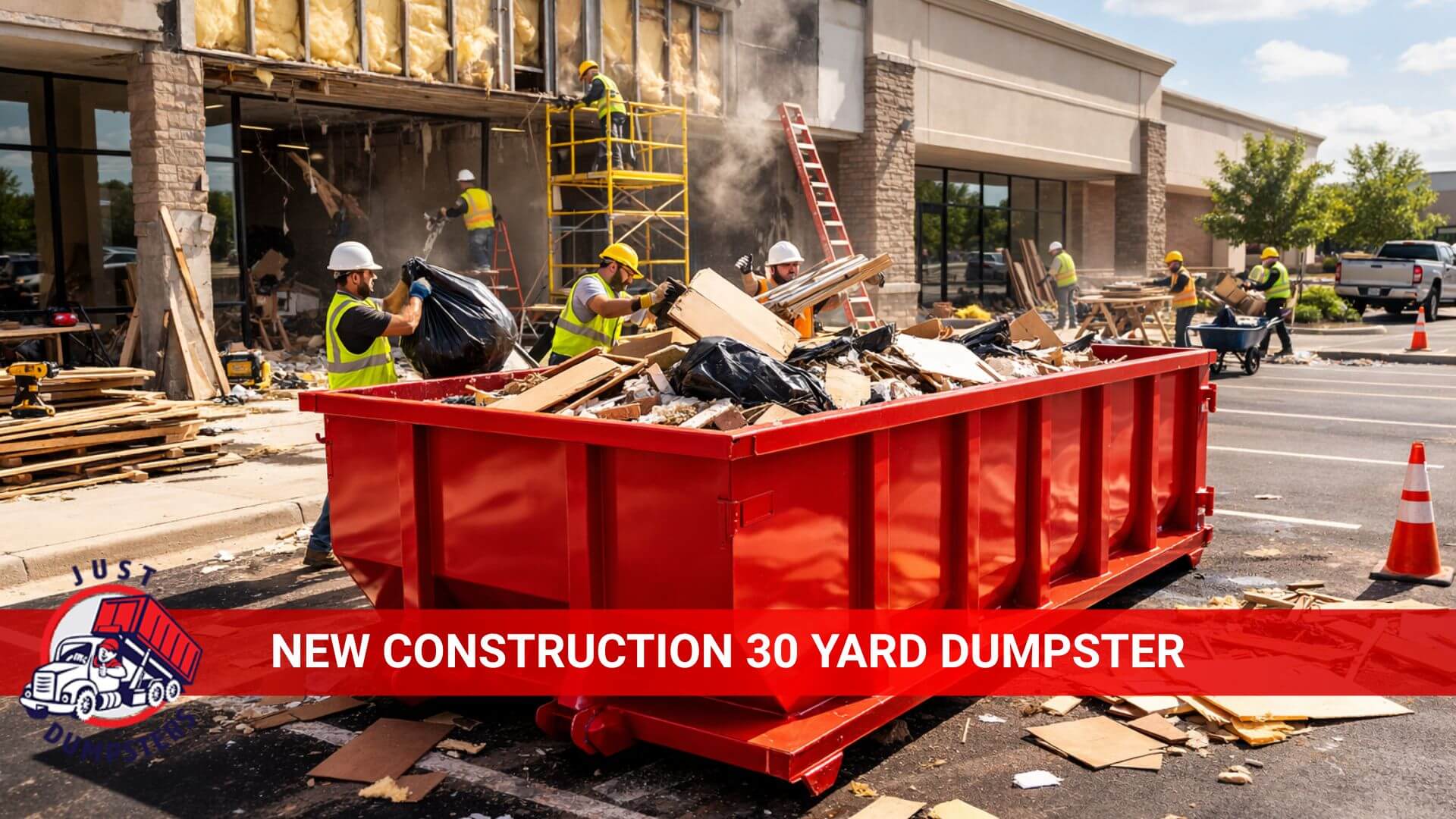
A new construction 30 yard dumpster is a large roll-off container designed to hold debris generated during building projects. It provides substantial capacity for materials like lumber scraps, drywall, insulation, and packaging waste commonly produced on construction sites.
Contractors often choose a 30 yard dumpster rental because it offers a balance between large capacity and manageable space requirements. This container size is ideal for projects that generate significant debris but still need efficient loading and placement on a job site.
How Large Is a 30 Yard Dumpster?
A 30 yard dumpster is considered a large container in the roll-off dumpster industry. Most models are approximately 22 feet long, 8 feet wide, and around 6 feet high.
These dimensions provide enough space for large construction loads while still fitting in most residential build sites or commercial project areas. Builders frequently select this large dumpster rental option when working on new homes, additions, or major renovations.
How Much Debris Can a 30 Yard Dumpster Hold?
A 30 yard dumpster typically holds around 30 cubic yards of waste. This is roughly equal to nine to twelve pickup truck loads of debris.
Because of this capacity, it works well for construction projects where materials accumulate quickly. Instead of arranging multiple waste pickups, contractors can load debris into one central container and keep the work area organized.
What Types of Construction Waste Can Be Placed in the Dumpster?
A construction dumpster is designed to handle many types of building materials and job-site debris. This versatility makes it a reliable solution for contractors managing large projects.
Common materials include:
- Lumber and wood scraps
- Drywall and plaster
- Roofing shingles
- Flooring materials and tiles
- Packaging materials from construction supplies
- Non-hazardous renovation debris
Using a dedicated dumpster keeps these materials contained and prevents clutter from spreading across the job site.
What Materials Are Not Allowed in a Construction Dumpster?
Although construction dumpsters can hold many types of debris, certain materials are usually restricted. These items require special handling to ensure safe disposal.
Items commonly prohibited include:
- Paints and solvents
- Automotive fluids and oils
- Batteries and tires
- Hazardous chemicals
- Asbestos or medical waste
Before loading materials, it’s always a good idea to confirm disposal guidelines with your rental provider.
Why Do Engineers Choose a 30 Yard Dumpster for New Construction?
Large construction projects produce a continuous stream of waste. A bigger dumpster allows crews to focus on the job instead of constantly worrying about debris removal.
Some advantages include:
- Large capacity for bulky materials
- Fewer waste pickups required
- Improved job-site organization
- Reduced downtime during construction
With reliable service from Just Dumpsters, contractors can keep their work areas clear while maintaining project momentum.
How Do Container Dumpster Sizes Affect Your Project?
Choosing the correct dumpster size can make a significant difference in waste management. Smaller containers may require frequent pickups, while oversized dumpsters might take up unnecessary space.
Understanding container dumpster sizes helps contractors select the right option for their project. A 30-yard container is often considered the middle-to-large option, offering substantial capacity without the footprint of the largest dumpsters available.
How Does a Dumpster Improve Job Site Efficiency?
Keeping a construction site clean improves both safety and productivity. Workers can move around the area more easily when waste is stored in one central location. A 30 yard dumpster rental provides a convenient place to dispose of debris as it is generated. This approach prevents materials from piling up around the site and helps maintain a professional, organized work environment.
What Projects Commonly Use a 30 Yard Dumpster?
A large dumpster is commonly used for projects that generate a substantial amount of debris. Its capacity makes it suitable for both residential and commercial construction work.
Typical projects include:
- New home construction
- Major home additions
- Large remodeling projects
- Roofing replacements
- Commercial construction jobs
These projects often require efficient waste removal to keep progress on schedule.
Where Can a 30 Yard Dumpster Be Placed?
Placement flexibility is one reason many builders prefer this dumpster size. It can usually be positioned on construction sites, parking areas, or driveways without major adjustments.
Common placement locations include:
- Residential construction lots
- Driveways or private property
- Commercial job sites
- Large renovation areas
Proper placement allows workers to dispose of materials quickly without interrupting construction activities.
How Long Can You Keep a Dumpster?
Most dumpster rentals are available for a set period, typically between 7 and 14 days. This timeframe works well for many phases of construction projects. If a project requires more time, many providers offer extensions for an additional fee. Scheduling the rental period carefully ensures the dumpster remains available throughout the busiest phases of construction.
What Factors Influence Dumpster Rental Costs?
Dumpster pricing can vary depending on several important factors. Understanding these variables helps contractors estimate project costs more accurately.
Factors that often affect pricing include:
- Length of the rental period
- Weight limits for the container
- Type of debris being disposed of
- Delivery distance from the rental provider
- Overage charges for exceeding limits
Discussing these details with Just Dumpsters can help ensure clear and predictable pricing before your project begins.
Why Is a Large Dumpster Rental Helpful for Contractors?
Construction schedules are tight, and delays can affect the entire project timeline. Having a dependable waste solution keeps the job site running smoothly. A large dumpster rental allows crews to focus on building rather than managing debris. With sufficient capacity, workers can load waste quickly without interrupting daily tasks.
Do Construction Sites Need More Than One Dumpster?
In some cases, a single container may not be enough for an entire construction project. Large builds or multi-phase developments may require multiple dumpsters over time. Some contractors schedule container swaps when one 30 yard dumpster becomes full. Others place more than one container on site to separate different types of debris for easier disposal.
Why Choose Just Dumpsters?
Reliable service is essential when managing construction debris. Builders need a company that delivers containers on time and removes them promptly when they are full. Just Dumpsters focuses on dependable delivery, top-rated rental terms, and responsive customer support. Contractors and property owners can rely on us to provide the right dumpster solution for their construction needs.
Ready to Manage Construction Waste More Efficiently? Get a Dumpster today!
A 30 yard dumpster rental is one of the most suitable solutions for handling debris from new construction projects. Its large capacity helps keep job sites organized while reducing the need for constant waste removal trips.
With professional service from Just Dumpsters, contractors can concentrate on completing their projects. At the same time, the waste management process remains simple and efficient from start to finish.