Commercial Project 30 Yard Dumpster
Coordinating waste removal is a key part of any large jobsite. When demolition materials, packaging, and construction debris start piling up, a dependable disposal plan becomes essential for maintaining a safe and efficient work environment. For many contractors and project managers, a 30 yard dumpster rental provides the capacity needed to handle high volumes of waste without slowing progress.
Commercial construction sites, renovations, and large property cleanouts often generate far more debris than standard bins can handle. With dependable service from Just Dumpsters, businesses can keep their work areas organized while ensuring debris is removed quickly and responsibly.
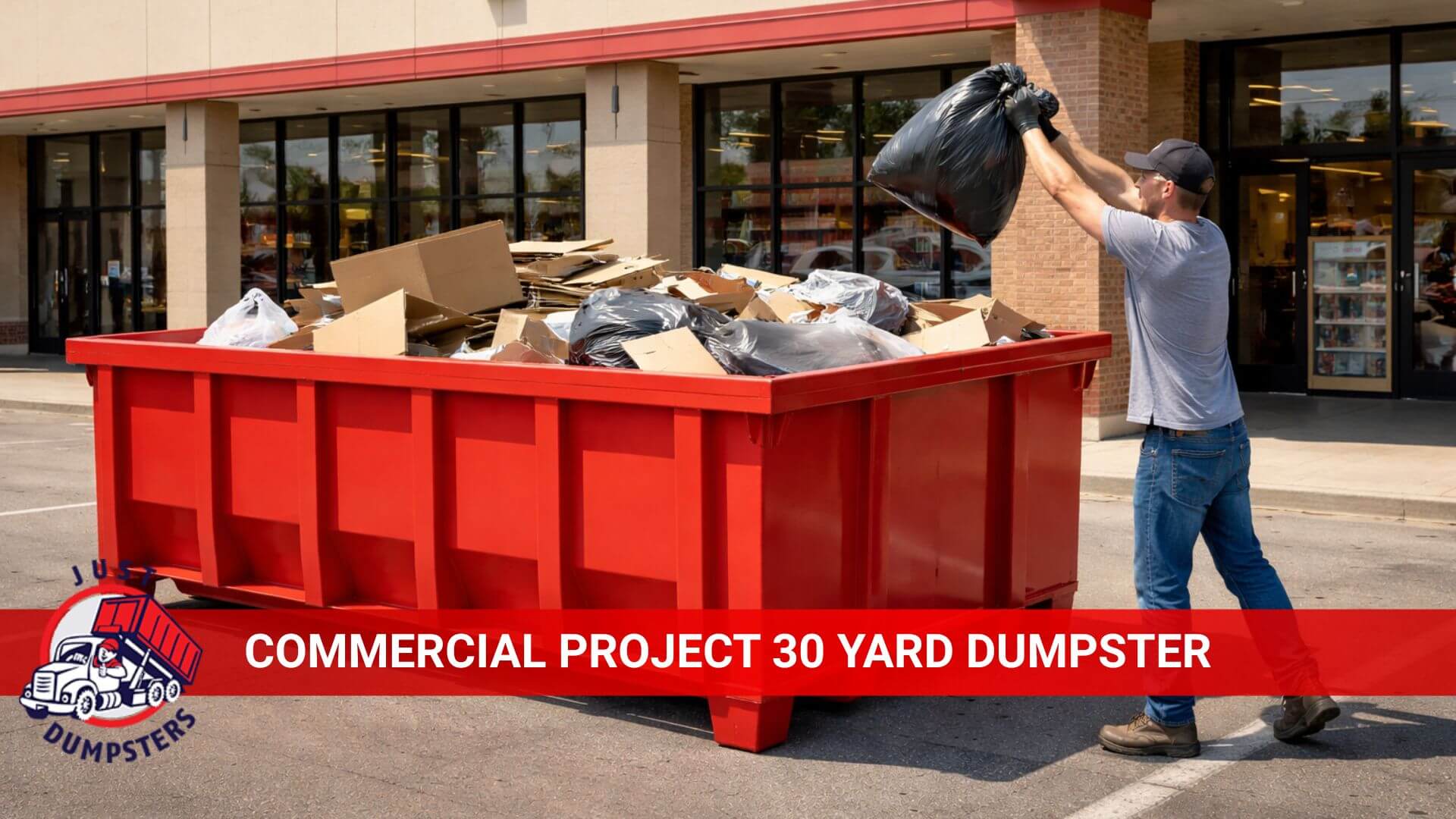
What Is a Commercial Project 30 Yard Dumpster?
A 30-yard dumpster is a large roll-off container designed to manage significant amounts of debris from commercial and industrial projects. It offers ample space for bulky materials while still fitting on most job sites or designated disposal areas.
Contractors frequently rely on this container size because it provides a balance between high capacity and manageable placement. With service from Just Dumpsters, the container is delivered directly to the site and picked up once the project is finished.
Why Is a 30 Yard Dumpster Ideal for Commercial Projects?
Commercial projects tend to produce continuous streams of waste during demolition, renovation, or construction work. A larger container allows teams to focus on the project rather than making repeated trips to disposal facilities.
This size also supports better jobsite organization. Having a single, designated location for debris helps maintain safety standards and keeps work areas free from unnecessary clutter.
How Large Is a 30 Yard Dumpster?
A typical 30-yard roll-off dumpster measures around 22 feet long, 8 feet wide, and approximately 6 feet high. These dimensions allow it to hold a large amount of debris while remaining accessible for loading.
Because of its height and length, this container is often placed in open work areas such as construction zones, commercial parking lots, or designated waste management spaces.
How Do Container Dumpster Sizes Affect Project Planning?
Selecting the correct container size plays a major role in managing waste efficiently. Smaller dumpsters may require multiple pickups, while oversized containers can take up unnecessary space.
Understanding container dumpster sizes allows contractors to match the container with the expected debris volume. A 30-yard option often works well for medium-to-large commercial projects where consistent debris removal is necessary.
Waste Can a 30 Yard Dumpster Hold
A 30-yard dumpster holds approximately 30 cubic yards of waste, which equals roughly nine to twelve pickup truck loads of debris. This capacity makes it ideal for projects that generate consistent waste over several days or weeks.
Large renovation projects and demolition work often require a large dumpster rental because smaller containers fill up too quickly. With a bigger capacity container, work crews can continue loading debris without interruptions.
What Types of Materials Can Be Placed in a 30 Yard Dumpster?
A commercial roll-off dumpster can handle a wide variety of construction and cleanup materials. This versatility makes it a popular choice for contractors and property managers.
Common materials include:
- Drywall and lumber
- Roofing shingles
- Flooring and tile debris
- Furniture and office equipment
- Packaging materials and cardboard
- Yard waste from landscaping projects
However, always check local regulations to ensure materials meet disposal guidelines.
What Items Are Typically Not Allowed in a Dumpster?
Specialized waste facilities must handle certain materials. These restrictions help protect both the environment and waste management workers.
Items that are often restricted include:
- Paints, solvents, and chemicals
- Batteries and automotive fluids
- Tires and large appliances with refrigerants
- Hazardous or flammable materials
- Medical or biohazard waste
Your provider can explain acceptable materials before delivery to prevent disposal issues.
What Commercial Projects Use a 30 Yard Dumpster?
Many industries rely on larger containers to manage waste effectively. This size is especially helpful when debris accumulates quickly during construction or property improvements.
Common commercial projects include:
- Large building renovations
- Retail store remodels
- Office cleanouts
- Demolition work
- Apartment complex renovations
- Warehouse cleanups
These projects often benefit from a 30 yard dumpster rental because the container can hold large quantities of debris without constant replacement.
How Does a 30 Yard Dumpster Improve Jobsite Efficiency?
Waste buildup can slow down productivity and create safety hazards on busy construction sites. A large container allows workers to dispose of debris immediately rather than letting materials accumulate.
Organized waste management also helps maintain clear walkways and work zones. When crews know exactly where debris should go, projects run more smoothly and safely.
What Factors Should You Consider Before Renting a Dumpster?
Choosing the right dumpster involves more than simply selecting a container size. Project managers should consider several useful factors before scheduling delivery.
Important considerations include:
- Estimated volume of debris
- Weight of construction materials
- Available space for dumpster placement
- Length of the rental period
- Local waste disposal regulations
Understanding these details helps ensure your container meets the demands of the project.
How Much Does a 30 Yard Dumpster Rental Cost?
Pricing for a 30 yard dumpster rental depends on several factors, including location, debris type, rental duration, and disposal fees. Larger containers typically cost more than smaller ones because they handle higher volumes of waste.
However, a large dumpster rental can actually save money on commercial projects. Fewer pickups and replacements often reduce overall disposal costs.
Where Can a Commercial Dumpster Be Placed?
Proper placement ensures the dumpster is easy to access while remaining safe for workers and the surrounding property. The container should be positioned on a stable, flat surface with enough clearance for delivery trucks.
Common placement locations include construction zones, parking lots, and designated waste collection areas. Always ensure the space allows the container door to open fully for easy loading.
How Long Can a Dumpster Be Kept on a Commercial Jobsite?
Rental periods vary depending on the provider and project needs. Many companies offer standard rental periods of about one to two weeks for construction projects.
For longer projects, rental extensions are often available. Coordinating pickup and replacement schedules with your provider helps maintain a consistent waste management plan throughout the job.
Do Commercial Dumpster Rentals Require Permits?
Permit requirements depend on where the container will be placed. If the dumpster is located on private property, such as a jobsite or business parking lot, a permit is usually not required.
However, if the container must be placed on a public street or sidewalk, local authorities may require a permit. Checking regulations ahead of time helps avoid project delays.
Why Do Contractors Choose Just Dumpsters for Commercial Projects?
Just Dumpsters focuses on dependable delivery, affordable pricing, and professional customer service. This reliability helps businesses maintain efficient jobsite operations from start to finish.
Reliable waste management is essential for keeping construction projects on schedule. Contractors need a service provider that delivers containers on time and removes them promptly when they’re full.
Ready to Manage Your Commercial Project Waste? Get a Dumpster today!
Large projects require a dependable plan for handling debris. A well-sized dumpster keeps materials organized, reduces clutter, and allows crews to focus on completing their work efficiently.
With reliable service from Just Dumpsters, businesses can simplify waste management and keep their commercial projects running smoothly. A properly chosen container ensures debris removal is handled quickly, safely, and without unnecessary delays.